
The Myth of the "Perfect" Prayer: Why God Prefers Your Honest Words
We’ve all been there.
You’re sitting in a circle or standing in a pew, listening to someone pray a prayer so eloquent it sounds like a scripted monologue. Their vocabulary is flawless, their tone is reverent, and their theology is perfectly tucked in. In those moments, it’s easy to look at your own prayer life, usually whispered over lukewarm coffee or sighed during a chaotic commute, and feel like it doesn't quite count.
We feel this immense pressure to perform, as if God is an English professor grading us on our vocabulary. But the Bible tells a very different story.
The Sanctuary Performance vs. The Sincere Plea
Jesus once told a story about two men who went to the temple to pray (Luke 18). One was a "man of the church," a Pharisee who stood tall and gave a long, impressive speech about his own righteousness. He boasted about his fasting, his giving, and how he wasn't like those other people.
On the other side of the room was a tax collector, someone the culture viewed as a sinner. He couldn't even bring himself to look up. He simply beat his breast and said, "God, have mercy on me, a sinner."
From the outside, the religious leader looked holier. But Jesus revealed the truth: it was the tax collector’s broken honesty that moved the heart of God. God doesn't expect perfection; He expects humility.
"The Lord does not look at the things people look at. People look at the outward appearance, but the Lord looks at the heart." — 1 Samuel 16:7
Biblical Blueprints: Sincerity Over Eloquence
If you feel like your prayers are too simple, you are actually in elite company. Some of the most powerful moments in Scripture came from people who ditched the script:
David: The "man after God’s own heart" filled the Psalms with raw, unfiltered emotion. He didn't use flowery language when he was scared or guilty; he cried out, "Save me!" or "Cleanse me!" His power wasn't in his poetry, but in his transparency.
Jesus: When the disciples asked Him how to pray, He didn't give them a complex theological treatise. He gave them the Lord’s Prayer, a concise, direct, and incredibly simple framework that covers everything from daily bread to daily forgiveness.
The Early Church: In the book of Acts, we see believers praying in homes and even in prisons. Their prayers weren't about formal liturgy; they were urgent, "one-accord" cries for boldness and healing. They spoke to God as a Father, not a distant monarch.
Prayer for the "Busy" Believer
The good news for those of us juggling a million responsibilities is that a powerful prayer life isn't measured by minutes, but by intimacy.
A simple prayer offered while you’re folding laundry or sitting in a school pickup line is just as holy as an hour-long session in a cathedral. God is looking for the connection, not the production. When we stop trying to be eloquent, we finally start being honest, and that is where true spiritual growth begins.
Every simple, honest, and quick word you offer is making a difference because it is a bridge built on trust rather than a wall built on performance.
Finding Your Voice Again
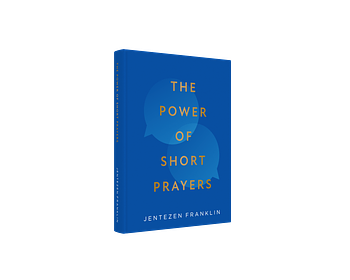
If you’ve been feeling stuck in your prayer life or overwhelmed by the pressure to perform, I highly recommend picking up a copy of The Power of Short Prayers by Jentezen Franklin.
In this book, we are shown that God isn't looking for a polished version of you; He wants the real you. It is a fantastic resource for anyone looking to trade religious performance for a genuine, life-giving relationship with the Creator, one simple sentence at a time.
Start where you are. Use the words you have. He is already listening.
Share